Your operation requires consistent cleaning schedules customized for unique hazards, daily throughput, allergen management, and regulatory visits, with auditable records validating HACCP requirements, inspection compliance, and public health regulations. The information following give guidance on sanitation program requirements.
Important Highlights
- Brampton sanitation experts support restaurants, grocery departments, commissaries, warehouses, bakeries, schools, mobile vendors, and allergen-sensitive operations.
- They sanitize frequently contacted areas, food-contact equipment, kitchens, floors, drains, restrooms, and storage areas using zone-based workflows to eliminate cross-contamination.
- Recording of conclusion through tests, audits, and correction logs ensures trained vendors have checked approved sanitizer dilution, compatibility, and contact time.
- Everyday, weekly, and annual tasks allocated by zone form maintenance plans built on threat, production rate, switches, spills, and regulations.
- Vendors ought to exhibit hazard analysis knowledge, public-health expertise, safety training preparation, insurance, endorsements, colour-coded implements, and assessment-ready maintenance files.
Food Safety Cleaning Requirements for Brampton Operations
Food safety cleaning is necessary for any Brampton facility that deals with, keeps, prepares, packages, or provides food. Apply it to your facility if it is subject to public health inspection, food premises regulations, or internal HACCP-based controls. This includes eateries, cafes, warehouses, supermarket areas, meat markets, fish stands, convenience outlets, and institutional food areas.
You also need documented food sanitation in supply warehouses, manufacturing facilities, refrigerated storage, bakeries, school feeding programs, reception facilities, and delivery centers. Mobile and seasonal operations count too, including food trucks, event vendors, and temporary booths. If your staff handle ingredients, section prepared foods, heat finished items, or keep allergens stored, your facility needs documented cleaning protocols. In Brampton, sanitation isn't elective; it's part of legal, operational, and consumer protection compliance.
What Do Brampton Cleaning Professionals Handle?
Professional cleaning teams specializing in Brampton disinfect high-contact surfaces, food preparation areas, floors, and sanitary facilities in compliance with food safety regulations. Emphasis on these spaces stems from extreme cross-contamination risk, injury hazards, and compliance issues.
When you understand what they clean, you can verify that your facility's cleaning scope meets operational and regulatory requirements.
Emphasizing High-Touch Surface Cleaning
Expert Brampton facility managers appreciate that high-touch surfaces demand disinfection since these areas accumulate pathogens and debris. You need a formal plan for cleaning entry points, contact surfaces, control panels, railings, shared devices, registers, and cold storage handles. Implementing surface identification mapping, specialists locate every frequently handled area and set cleaning timing
using one-way patterns, and dividing cleaning materials organized by section
Kitchen Areas, Floor Surfaces, and Bathroom Spaces
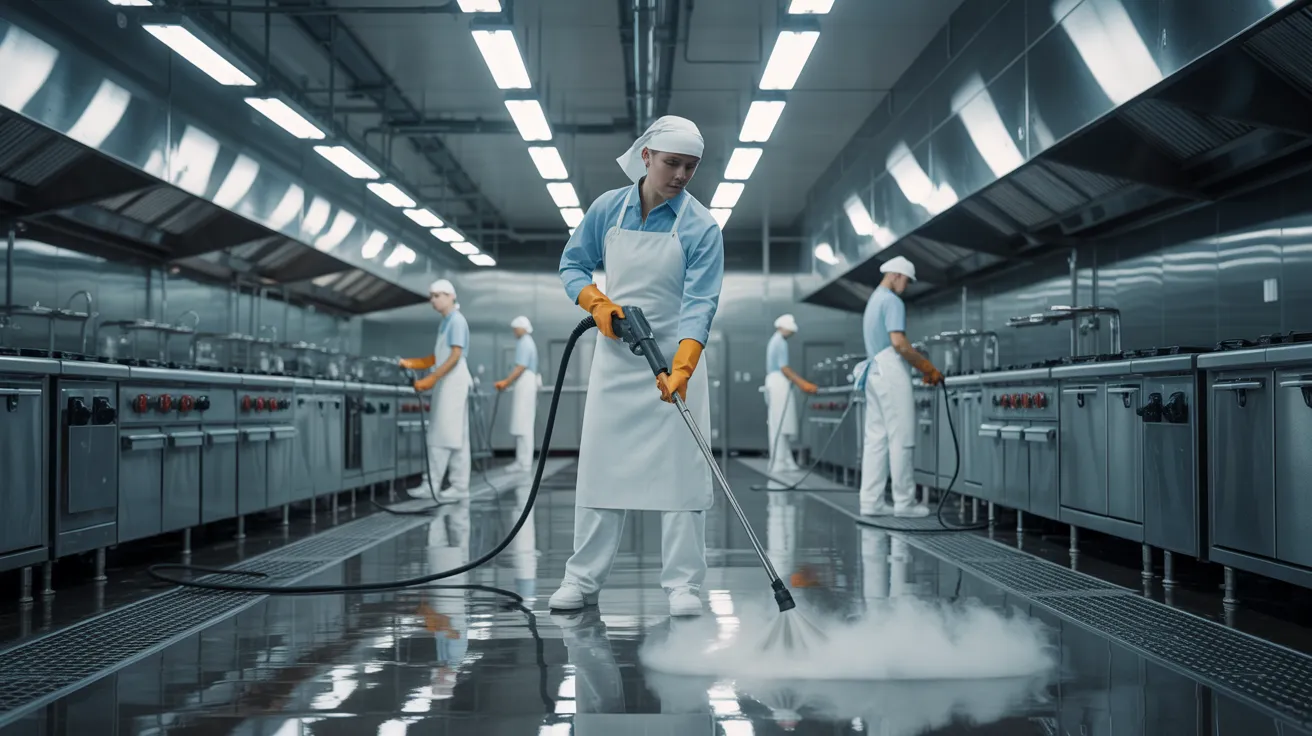
Expect Brampton cleaning experts to focus on kitchens, floors, and restrooms because each area carries distinct foodborne illness prevention, slip-and-fall, and public health risks. In industrial kitchens, you need grease removal from cooking stations, appliance surfaces, drain systems, preparation areas, and backsplashes to minimize contamination and pest pressure.
Documented floor maintenance is likewise provided as part of the service.
Restroom sanitation involves sanitizing surfaces, fittings, separators, dispensers, and containers, replenishing amenities and managing odor. They also maintain restaurant cleaning supply rooms where product storage, sink cleanliness, and drain systems impact daily sanitation standards and worker protection.
The Importance of Food Safety Cleaning in Brampton
In Brampton, you must copyright food-safe cleaning standards to meet health code requirements and pass inspections. You also reduce cross-contamination by cleaning and sanitizing food-contact surfaces, equipment, and high-touch areas correctly. Most importantly, you safeguard public health by lowering the risk of foodborne illness in your facility.
Health Code Compliance
Brampton food operations must comply with strict public health standards, so food safety cleaning is essential to adhering to health codes, safeguarding customers, and sidestepping penalties. You must maintain clean food preparation areas, recorded sanitation plans, correct sanitizer application, and documented employee protocols that correspond to municipal and provincial inspection expectations.
During regulatory review of your operation, regulators assess whether your cleaning program facilitates protected inventory management, tool sterilization, refuse management, and bathroom upkeep. Detailed hygiene logs allow you to prove due diligence during inspection audits and show that your procedures are uniform, consistent, and monitored.
Cross-Contamination Prevention
Meeting health code standards also depends on your capacity to stop cross-contamination during routine food preparation and sanitation. You must keep raw items away from prepared dishes, sanitize prep surfaces between tasks, and keep cleaning products separate from food areas. Clear procedures reduce transfer risks and ensure ongoing adherence to health checks.
You could implement allergen segregation to prevent priority allergens from contacting common areas, containers, or machinery. Use dedicated cutting boards, color-coded tools, and strict utensil labeling so staff don't mix items throughout cooking or delivery. Enforce washing hands following raw meat, seafood, eggs, or allergen-containing products. Swap cleaning rags frequently, and test disinfectant concentration using strips. When you train staff to follow these controls each shift, you develop a more sanitary, secure business that matches Brampton's safety requirements daily.
Public Health Protection
When food safety cleaning weaken, you don't only risk a failed inspection—you raise the likelihood of foodborne illness striking customers, staff, and the larger Brampton community. You also undermine your responsibility in protecting public health, especially in busy food facilities where contamination can spread quickly through surfaces, equipment, and touchpoints.
You need cleaning protocols that remove soils, sanitize correctly, and confirm effectiveness. That requires adhering to contact times, employing authorized sanitizers, documenting schedules, and training staff to meet regulatory standards. These controls support pathogen reduction by lowering microbial loads before they reach food or hands. In Brampton, strong sanitation shields at-risk groups, limits outbreak potential, and enables you to show proper care. When you maintain proper standards, you don't just meet regulations—you actively reduce risk and support safer food service throughout the region.
How Does Cleaning Support Food Safety Compliance?
Maintaining comprehensive cleaning schedules strengthens food safety compliance by decreasing contamination threats, managing pathogen expansion, and keeping your facility compliant with sanitation requirements under HACCP-based programs and public health regulations. You validate that product-contact areas appear visibly clean and microbiologically controlled, backing documented preventive controls and inspection readiness.
Cleaning programs additionally fortify allergen mitigation by clearing residues that can provoke undeclared allergen exposure.
Establishing When to Arrange Commercial Cleaning
cleaning routines or between production runs wherever food contact surfaces, restrooms, and frequently touched surfaces
weekly schedules for drain systems, vents, storage racks, and hard-to-reach zones, according to inspection results and sanitation logs.
Finding Quality Brampton Cleaning Experts: A Guide
Start by screening providers against food-safe sanitation requirements, not cost only. You should verify that each company understands CFIA, public health, and HACCP compliance standards relevant to your facility. Ask for insurance documentation, WHMIS compliance, documented staff training, and supervision practices. Review whether technicians understand contamination prevention, chemical handling, and traceable sanitation records.
Additionally, you need to evaluate service dependability and responsibility. Obtain references from food facilities in Brampton, then review service speed, corrective-action procedures, and communication standards. Verify the company supports supplier audits and can deliver compliance-ready records when inspectors or external parties need proof. Verify equipment is maintained, colour-coded tools are applied correctly, and site-specific hazards are identified. A capable service protects compliance, product quality, and your brand reputation.
What's covered in a sanitation cleaning strategy?
Create a written plan that defines every sanitation duty, guideline, and expectation prior to beginning production. You should document cleaning frequencies, approved chemicals, dilution rates, contact times, tools, and verification methods for each area, section, and machine. Be sure to include pre-operational inspections, corrective actions, and employee training requirements.
Your strategy should also focus on cross-contamination controls, waste handling, pest-prevention measures, and documented schedules for restrooms, drains, floors, and food-contact areas. Detail how you'll keep raw and ready-to-eat processes separate, facilitate ingredient tracking, and maintain accurate allergen labeling through validated cleaning between product changes. You should set accountability, keep signed records, and review results against regulatory standards, HACCP controls, and customer requirements. When gaps appear, update procedures immediately and instruct staff.
Frequently Asked Questions about the Plan
Do cleaning services work during nighttime hours at Brampton properties?
Yes, you can arrange cleaning services to accommodate nighttime operations in Brampton facilities. You'll organize overnight sanitation around production schedules, security protocols, and personnel needs. Services typically establish overnight logistics to minimize disruption, maintain standards, and record finished tasks. You should confirm arrival schedules, management, access procedures, and disposal procedures before starting service.
Can Brampton cleaning experts handle hazardous incidents?
Yes, you can locate several Brampton sanitation experts offering spill containment services. They handle contamination, evaluate risks, isolate zones, and perform swift decontamination to reduce exposure and prevent disruption. You should confirm timeframes, certifications, protocols, and procedures. If your facility evaluation must meet standards, choose a service that logs events, follows procedures, and supports audits.
Can eco-friendly disinfectants be used safely on food-handling equipment?
Definitely, eco-friendly disinfectants operate safely on food preparation areas if you purchase items marked food-safe that comply with regulatory compliant. You must confirm contact duration, dilution ratios, and rinse procedures prior to application. Plant based formulas lower harsh chemical exposure, but you need demonstration of efficacy against relevant pathogens. To preserve residue-free areas, stick to precise manufacturer instructions and validate your disinfecting agent meets food sanitation requirements.
Will cleaning schedules respond to seasonal shifts?
Certainly, maintenance plans respond to seasonal shifts readily. Modify timing, staffing, chemicals, and confirmation procedures to match with seasonal workflows while maintaining compliance standards. Limit production downtime via planning cleaning alongside equipment transitions, peak volumes, and operational patterns. Additionally modify SSOPs, staff education, and environmental monitoring to address periodic risks, additional allergens, or higher contamination levels. Periodic assessments maintain your strategy functional.
Do professional cleaning services train employees on sanitation best practices?
Absolutely, commercial cleaners frequently provide staff training on sanitation best practices. Your staff gets instruction on correct chemical handling, contact times, cross-contamination prevention, equipment disassembly, and paperwork. They generally match guidance with HACCP, GMP, and CFIA or regional health authority requirements. Many conduct sanitation audits to ensure adherence, identify gaps, and strengthen corrective measures. This helps you maintain uniform standards, pass inspections, and lower contamination dangers routinely.
Final Thoughts
Partnering with Brampton food safety and commercial cleaning experts goes beyond tidying—it guarantees your operation meets inspection standards and your protocols are defensible. From processing facilities to kitchens, each cleaned area and maintained corner lessens contamination risk and prevents major expenses. By scheduling maintenance at suitable frequencies and executing a comprehensive cleaning strategy, you shield staff, clients, and your image. In a heavily regulated sector, sanitary conditions can't be overlooked—they're vital to proper management.